Medical Device Labels and Manuals Under EU Language Rules.
05 April, 2026· Article by Maria Jones


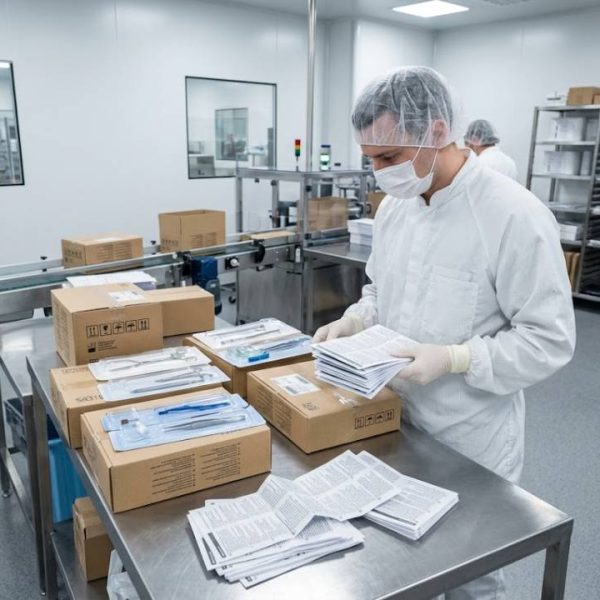
From blood glucose meters and hearing aids to surgical instruments and diagnostic software, medical devices are sold across Europe in huge numbers. Every one of them comes with labels, instructions for use, safety warnings and often software interfaces. Under European rules, much of this information must be available in the official languages of the countries where the device is sold.
For manufacturers, this creates a large and ongoing translation workload, with little room for error.
What the regulation requires
The EU Medical Device Regulation sets out requirements for the information supplied with a device. Member states can decide which languages are required on their territory, and most require their own official language or languages. For a device sold across the EU, this can mean more than twenty language versions of labels and instructions.
Information must be clear, accurate and understandable to the intended user, whether that is a surgeon, a nurse or a patient using the device at home.
Different users, different language
A device used by trained professionals can use technical terminology. A device used by patients at home must be explained in plain language, with clear steps and warnings. Translators must adapt to the intended user, not just to the target language. A literal translation of professional terminology into a patient leaflet can make instructions confusing or even dangerous.
Key markets and languages
Germany is the largest medical device market in Europe, and German-language documentation is essential for Germany, Austria and parts of Switzerland. Manufacturers often rely on specialised german translation services with medical and regulatory expertise, since German authorities, notified bodies and hospitals pay close attention to terminology.
France, Belgium, Luxembourg and Switzerland require French versions. Beyond labels and instructions, manufacturers regularly need french document translation services for declarations of conformity, clinical evaluation summaries, field safety notices and correspondence with authorities.
Managing twenty-plus languages
Keeping labels and instructions synchronised across more than twenty languages is a major operational challenge. A single design change, a new warning or an updated contraindication must be reflected in every language before the updated device is shipped. Manual processes quickly break down.
Many manufacturers now use a cloud-based translation management system connected to their document management and labelling systems. Changes are detected automatically, only the modified segments are sent for translation, and every language version is tracked with a full audit trail, which is valuable during regulatory audits.
Terminology and consistency
Medical terminology must be consistent across all documents: labels, instructions, software screens, training materials and marketing. The same part or function must always have the same name. A multilingual termbase, reviewed by clinical and regulatory experts, is the foundation for consistent translation.
Medical device manufacturers that struggle with this complexity often rely on specialist technical translation services rather than generalist agencies. Such providers combine regulatory knowledge with engineering expertise, so labels, instructions, and software strings stay consistent across every language. They also build validated termbases and translation memories that survive product updates and design changes. Choosing a partner with real technical translation experience reduces audit risk and keeps every market's documentation aligned.
Symbols can reduce text
International standards provide symbols for common information such as the manufacturer, expiry date, batch number and "consult instructions for use". Using harmonised symbols reduces the amount of text on labels, saves space and lowers translation costs. However, symbols must be used correctly and sometimes need an explanation in the instructions.
Quality assurance
Translations for medical devices should follow a documented process: qualified translators with medical knowledge, independent revision, and review by in-country experts or distributors where possible. Some manufacturers also perform usability testing with translated instructions to confirm that users in each market understand them. All steps should be recorded as part of the quality management system.
Field safety notices under time pressure
When a safety issue is discovered, manufacturers may need to send field safety notices to hospitals and users across Europe within days. These notices must be accurate, clear and translated into every relevant language at the same time. Having pre-approved templates, a validated termbase and a translation partner who can mobilise quickly makes a real difference in these situations. Delays or unclear translations during a recall can put patients at risk and attract regulatory attention.
Working with distributors
Local distributors often know their markets best and may review translations before launch. Their input is valuable, but it should follow a defined process with clear responsibilities, so that changes are documented and applied consistently across all related documents rather than made informally on a single label.
Common pitfalls
- Translating late in the product launch and rushing quality checks.
- Inconsistent terminology between labels and instructions.
- Using professional jargon in patient-facing materials.
- Forgetting to update all languages after a design change.
- Poor layout causing truncated or overlapping text on labels.
Software and digital instructions
Many modern devices include software with screens, alarms and error messages. These must also be translated and tested in every language. Electronic instructions for use are permitted for certain professional devices, which can simplify updates but still require full translation and version control.
Safety through clarity
In the medical device industry, translation is part of patient safety and regulatory compliance. Manufacturers that plan translation early, invest in qualified specialists and use systems that keep every language version aligned reduce risk, speed up market access and protect the people who rely on their products.
Recent Posts
Website Localization: How to A...

How Law Firms Manage Cross-Bor...

Why Customer Support Teams Nee...

Warum Unternehmen auf professi...

Why University Admissions Need...
Why Admissions Teams Need Smar...
Share it.

We use cookies
We use cookies to give you the best online experience, remember your preferences, and understand how the site is used. You can accept all cookies, reject optional ones, or choose which categories to allow.
Privacy PolicyCookie preferences
Choose which cookies we can use. Necessary cookies stay on because the site cannot work without them.
For more details, read our Privacy Policy.